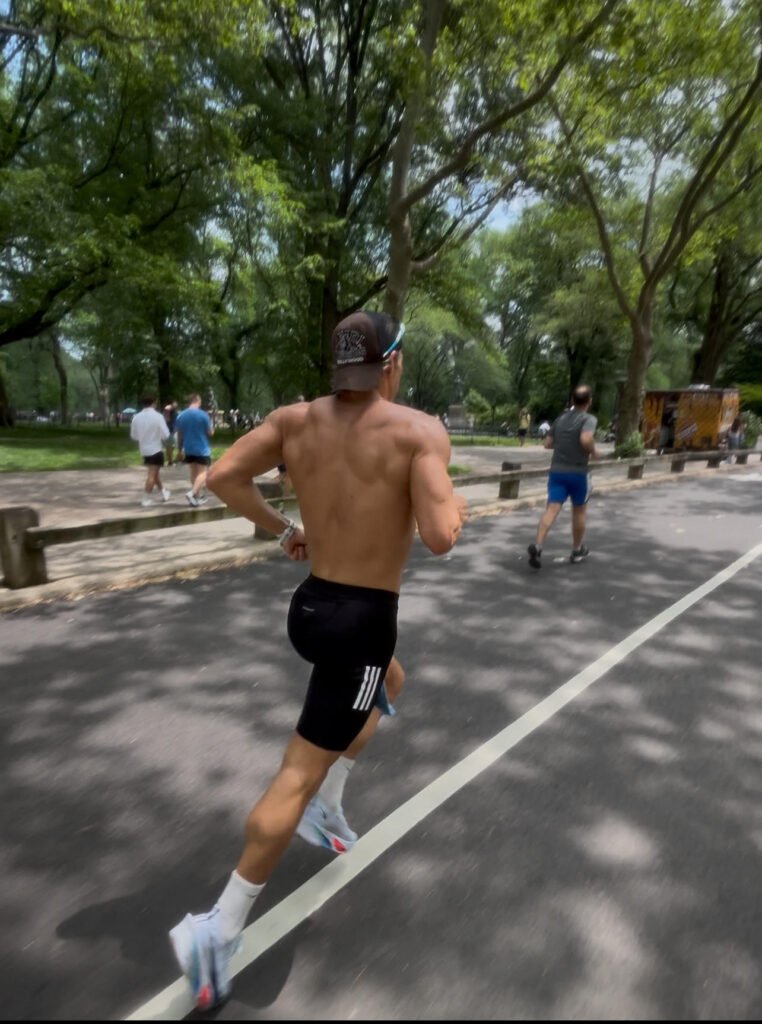
The new year has a strange effect on people. It makes them reflective, hopeful, and just brave enough to imagine a different version of themselves. For a brief moment, they allow themselves to picture change. But that moment is fragile. Almost immediately, caution follows. People soften their dreams before they ever say them out loud. They add conditions. They lower expectations. They disguise ambition as realism so that if it never happens, no one can say they failed.
People are not afraid of hard work.
They are afraid of being seen trying.
Big goals make people uncomfortable because they remove the safety of anonymity. Once something is said publicly, it carries weight. It can be judged. It can be measured. It can be watched. And if it collapses, the collapse is visible. For most people, that risk is enough to stay quiet forever.
I have never been good at staying quiet.
I have always believed that goals rot when they stay hidden too long. Silence feeds doubt. If something matters enough to scare you, it matters enough to be said clearly. Not because it guarantees success, but because it demands honesty.
What are you afraid of losing when nothing in this world belongs to you anyway. Your body is borrowed. Your time is temporary. Every person you love is here on loan. One day, without warning, all of it will be taken back. That truth does not make life meaningless. It makes it precise.
I learned that precision the hard way.
Before ultras, before endurance became my language, there was sobriety. There was weight. There was a version of myself living inside habits that were slowly killing me. Getting sober was not heroic. It was survival. It was recognizing that the path I was on had an ending I did not want to reach. Losing over one hundred pounds was not about aesthetics. It was about reclaiming control over something that felt unmanageable for years.
Those changes taught me something fundamental about myself. Once I decide something, I do not negotiate with it. I do not believe in half commitments. I do not believe in goals that come with escape routes. When I choose something, it becomes non negotiable. You say it, and then you do it. The argument is over.
That mindset makes people uncomfortable. It forces clarity. It removes excuses. It demands responsibility. But it is also the only reason I am here writing this instead of wondering what could have been.
This year, I will run twelve ultramarathons in twelve months.
On paper, it looks simple. One race per month. Distances ranging from fifty kilometers to fifty miles, one hundred miles, two hundred miles, six hour events, twenty four hour events, and a last man standing race that strips competition down to its most brutal question. How long can you stay when everyone else leaves.
On paper, it looks manageable. On paper, it looks impressive but clean. Paper has no fatigue. Paper does not wake up sore. Paper does not feel doubt at three in the morning. Paper does not question your decisions when the novelty wears off and the calendar keeps turning.
In reality, this scares me in the right way.
I know these races will teach me things for the rest of my life. Not lessons you can read about or think your way into. Lessons that only show up when the body is exhausted, the mind is bargaining, and the only option left is growth. There are places these races take you that normal life never will. Places where excuses stop working. Places where identity dissolves and only behavior remains.
I want a lot out of life. More than comfort. More than safety. More than a clean story. The amount of life I want is so big that these races feel like preparation. Preparation for uncertainty. For pressure. For loss. For responsibility. For moments when quitting would be easier than staying.
Running twelve ultras is not about proving toughness. It is about choosing to go somewhere so uncertain and painful that adaptation is mandatory. You either grow, or you leave. There is no third option.
I was not going to document this journey. Something about it felt wrong at first. Too exposed. Too performative. There is a purity in suffering quietly. In knowing something is yours alone. I worried that sharing it would dilute the meaning. That it would turn something sacred into content.
Then I remembered something important. There are people who expand limits, and there are people who watch others do it. Every boundary we accept as fixed exists because enough people stopped questioning it. If one person sees this and believes a limit they thought was permanent is actually negotiable, that matters. Change one life, and hundreds follow quietly behind.
That does not make me special.
In third person, this is not an exceptional man doing an exceptional thing. There are athletes stronger than him, faster than him, tougher than him. There are people doing things that make twelve ultras look ordinary. And the truth is, most people do not care. That realization is freeing.
This is not about being the best. It is not about proving anything to the outside world. This is mine. Internal belief. Internal reasons only. A commitment made inward, not a performance for approval. His journey does not need consensus. His happiness does not require understanding.
Running has become the work that takes care of me.
For me, committing to twelve ultras means ruthless focus. One task. One direction. Running. Training. Recovery. Discipline. Too many people avoid the work required to become better, then wonder why nothing changes. They chase motivation instead of structure. They wait to feel ready instead of becoming consistent.
This year, I care about nothing else, and that is not a flaw. When you take on something large, you have to become selfish. Not selfish in ego, but selfish in protection. One goal. One priority. Everything else either supports it or waits.
That kind of focus is uncomfortable in a world addicted to distraction. We are trained to multitask our lives into mediocrity. To chase ten things at once and commit fully to none of them. Endurance does not work that way. Neither does growth.
There will be days when I question this decision. Days when my body resists. Days when the gap between where I am and where I need to be feels overwhelming. That is part of the agreement. Growth requires friction. Transformation demands discomfort. You do not get the reward without accepting the process.
Pain is where this story becomes uncomfortable.
I have spent a long time trying to understand why I am drawn to pain the way that I am. Not inconvenience. Not discomfort wrapped in soft language. I mean real pain. The kind that strips you down. The kind that removes options. The kind that forces you to stay.
I did not find pain through running.
Pain found me first.
I grew up in a home where love and pain were indistinguishable. Where safety was inconsistent. Where affection came with fear attached. Abuse was not an event. It was the environment. It shaped my nervous system. It shaped how I understood closeness. It taught me that intensity meant connection and that endurance meant survival.
When pain is introduced early, it becomes familiar. Familiar becomes normal. Normal becomes comforting.
That is not something you choose consciously. It is something your body remembers long before your mind can explain it.
As a kid, I learned how to stay quiet. How to read shifts in tone. How to brace. How to endure. Love was not gentle. It was something you survived. Pain was not the enemy. Pain was the condition of staying.
So when people ask why I would choose something as extreme as twelve ultramarathons in twelve months, I understand the confusion. From the outside, it looks irrational. Excessive. Self inflicted. But inside my body, it makes sense.
Pain feels honest to me.
There is a calm that settles in once things hurt enough. A quiet that arrives when pretending becomes impossible. Pain removes performance. It removes ego. It removes distraction. I do not feel chaotic in it. I feel organized.
This is where the psychology gets uncomfortable.
I fell in love with pain, not because I enjoy suffering, but because pain is predictable. It has rules. It responds to preparation. It does not gaslight you. It does not surprise you emotionally. You show up. You work. It hurts. Then it ends.
That reliability is addictive.
In third person, it becomes clear. A child who learned to equate love with endurance grows into a man who seeks environments where endurance is rewarded. Where staying is noble. Where quitting is optional. Where the same skills that once kept him alive now create excellence.
Running became the place where my wiring finally made sense.
When I am deep into an ultra, when my feet hurt, my legs ache, my lungs feel heavy, something in me relaxes. The noise shuts off. The past disappears. The future stops asking questions. There is only the next step. The next breath. The agreement to continue.
I am calm in pain.
That sentence scares people. It should. But it is true.
Pain is the one place my nervous system knows exactly what to do. There is no ambiguity. No emotional guessing. No waiting for the other shoe to drop. Pain is present. Honest. Immediate. I can meet it without confusion.
This does not mean pain is pleasant. It is brutal. It is humbling. It exposes weakness. It drags doubts into the light. It asks questions with no comforting answers.
Why are you still here.
Who are you without relief.
What happens if you stop.
Those questions feel cleaner than the ones I lived with growing up.
Psychologically, I understand the risk. Pain releases chemistry. Endorphins. Dopamine. Relief. Calm. There is reward after suffering. The body learns that pattern quickly. The mind follows. It can become addictive.
The difference is choice.
As a child, pain was imposed. As an adult, pain is chosen. That distinction changes everything. Choice turns trauma into agency. Endurance becomes authorship. I am no longer surviving something done to me. I am engaging something I agreed to.
After an ultra, when the body is empty and the mind is quiet, I feel grounded. Regulated. Present. There is no anxiety buzzing under the surface. Pain does not haunt me afterward. It leaves me calm.
This is the reward no one sees.
In third person, it looks extreme. Obsessive. Like someone chasing suffering. From the inside, it is order. It is regulation. It is the safest I feel.
This path is not for everyone. Very few people would choose it. Because it removes the ability to hide. You cannot fake your way through an ultra. You cannot outsource the work. You cannot negotiate with mile seventy.
Most people avoid pain because it reminds them of things they never healed. I walk toward it because I learned how to survive it.
Twelve ultras is not about how much pain I can take. It is about how well I can stay present inside it. How often I can choose discipline over comfort. How many times I am willing to meet myself without escape.
I am not trying to punish myself.
I am not trying to prove anything.
I am returning to the one environment where my mind goes quiet, my body feels honest, and my past loosens its grip.
You will die. So will everyone you love. That truth is not meant to depress you. It is meant to free you. Why beg for praise or approval from people who are just as temporary as you are. Why shrink your goals so they fit inside someone else’s comfort.
You were not made to be comfortable. You were made to be tested.
If the weight of this challenge shatters me, I will shatter like art. Honest. Sharp. Rearranged into something truer.
Nothing is impossible to the person who will try.
Not because trying guarantees success, but because trying is the only way to discover what you are actually capable of.
That is why I do this.